- srikantabhinov@gmail.com
- +91 9958783620
Prostate Cancer

Prostate Cancer
Prostate cancer is a growth of cells that starts in the prostate. The prostate is a small gland that helps make semen. It's found just below the bladder. The prostate is part of the male reproductive system. Prostate cancer is one of the most common types of cancer. Prostate cancer is usually found early, and it often grows slowly. Most people with prostate cancer are cured.
About 1 in 8 men will be diagnosed with prostate cancer during their lifetime.
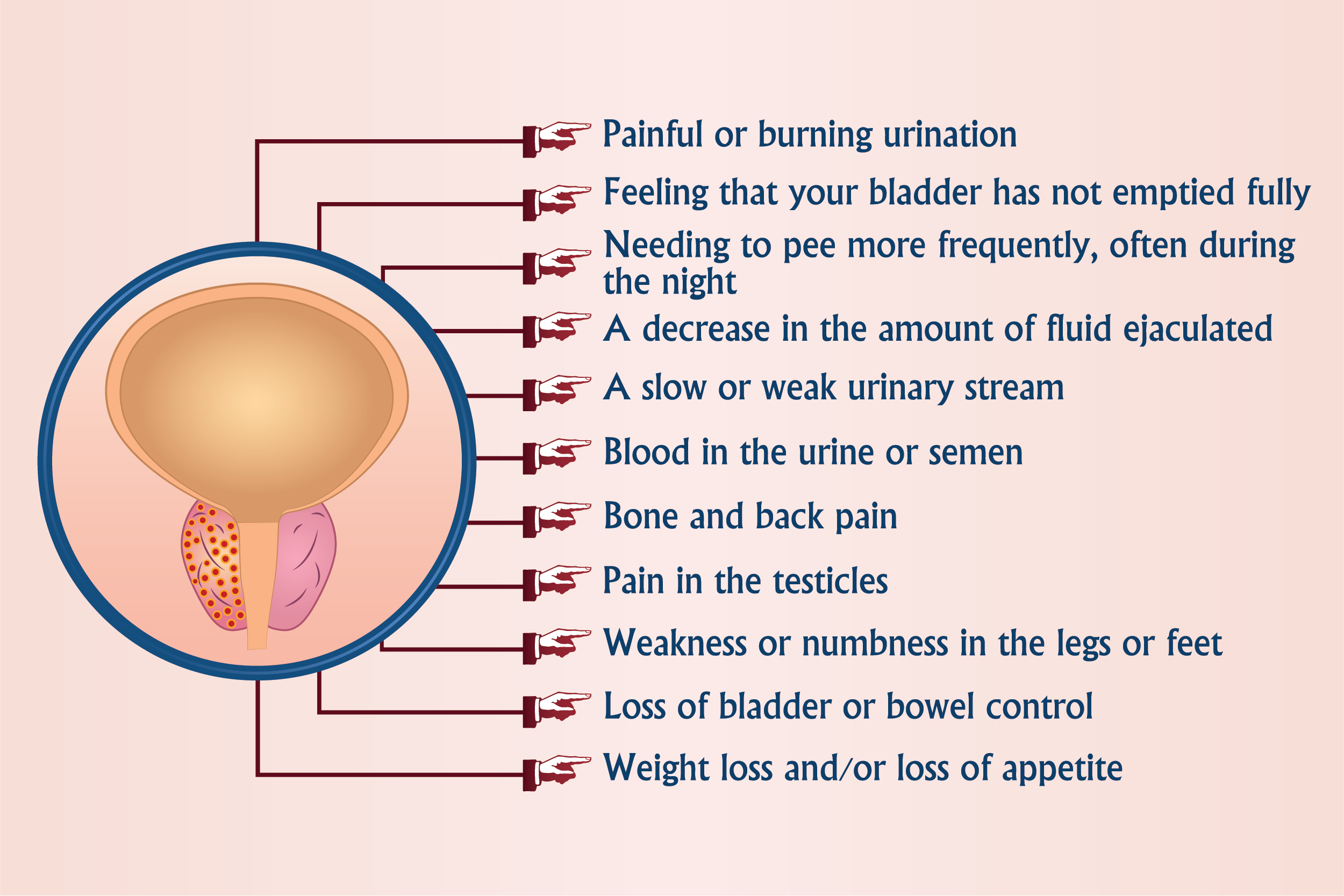
Sign and Symptoms
Early-stage prostate cancer often does not cause noticeable symptoms. However, as the disease progresses, certain changes may become apparent. These can include a frequent or urgent need to urinate, especially at night along with a weak urine stream or one that starts and stops. Some individuals may experience pain or burning during urination (dysuria), loss of bladder or bowel control, painful ejaculation, or erectile dysfunction. Additionally, the presence of blood in the urine or semen, and persistent pain in the lower back, hips, or chest may also indicate prostate cancer. It is important to consult a healthcare provider if any of these symptoms occur.
Risk factors
Several factors can increase the risk of developing prostate cancer. Age is a significant factor, with the risk rising as you grow older most cases are diagnosed in individuals over 50, and around 60% occur in those over 65. Race and ethnicity also play a role, as Black men or those of African ancestry face a higher risk, particularly for aggressive forms of the disease or early-onset cases. A family history of prostate cancer increases your likelihood by 2 to 3 times, especially if a close relative has been affected.
Management
Treatment for prostate cancer depends on several factors, including your overall health, whether the cancer has spread, and how quickly it is progressing. Most early-stage prostate cancers can be successfully treated. If the cancer is slow-growing and nonaggressive, your healthcare provider may suggest watchful waiting or active surveillance. More aggressive cases may require treatments such as surgery, radiation therapy, cryotherapy, hormone therapy, chemotherapy, stereotactic radiosurgery, or immunotherapy.